All Things DSO: EBITDA, Overhead, and Opportunity
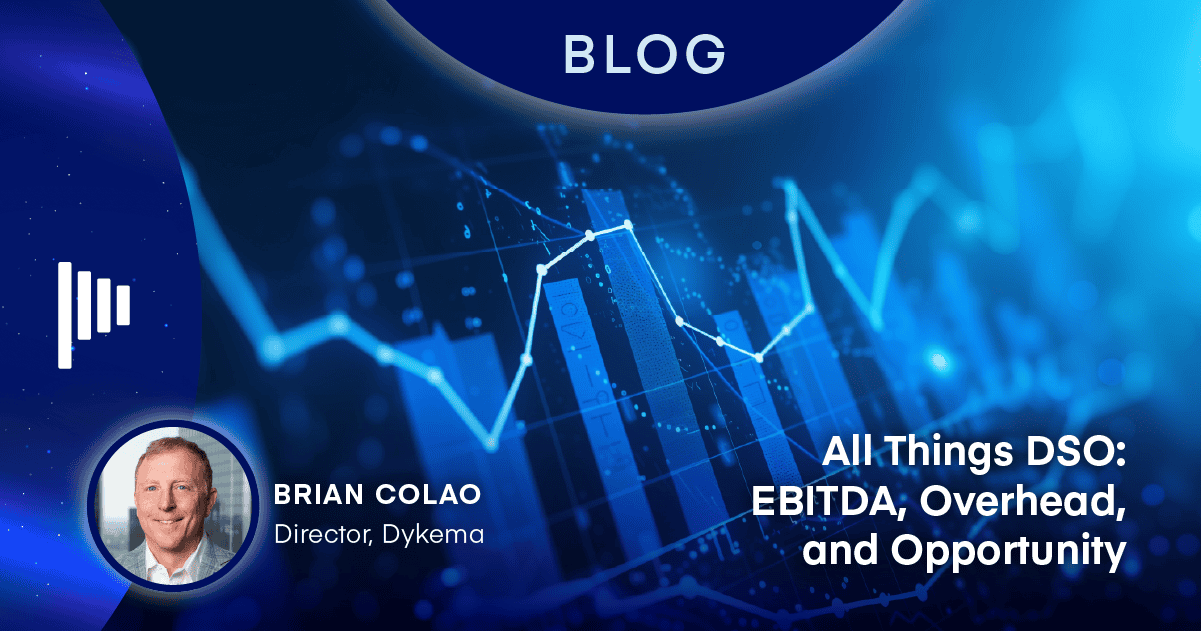
The dental support organization (DSO) market may be improving, but the recovery has been slower and more uneven than many organizations anticipated. During a recent All Things DSO webinar, hosted by Planet DDS Editor in Chief Beth Gaddis, Director of the Dykema DSO Industry Group Brian Colao shares his perspective on where the market stands today, why buyers remain cautious, and what DSOs should realistically expect over the next several years.
Dental Mergers & Acquisitions Reality Check
If you’ve been waiting for a single moment when the DSO mergers and acquisitions (M&A) market roars back to life, Brian Colao has news for you: It’s not coming.
“Everybody wanted this big, hey, everybody jumped in the pool, we’re back up,” said Colao. “It’s just not that way. It’s sort of like a few people got in, and then the next couple more got in.”
Colao, who has been involved in the DSO industry for more than three decades, describes the current recovery using a tortoise-and-hare analogy: slow, deliberate, and ultimately heading in the right direction. He anticipates announcing a few M&A deals by July 2026 but is careful to put that in context. “This is not 2021,” he said. “It’s not even close to 2021.”
His best estimate for a true inflection point is sometime in 2027 based on two trains of thought: Buyers remain cautious and sellers haven’t sufficiently adjusted their valuation expectations yet.
When asked what the chance was that EBITDA multiples will climb back to the 14x to 16x highs of 2021 within the next two years, Colao was blunt: “Zero chance.”
The Strategic Acquisition Trend Reshaping EBITDA
One of the clearest patterns Colao is seeing right now is DSOs acquiring other DSOs. Specifically, Colao says larger organizations with infrastructure built for scale are absorbing smaller platforms that got caught in the market downturn.
Colao gives this scenario as an example of why that trend is happening: A DSO built overhead for 100 dental practices but only reached twenty-five locations before interest rates tripled. The practices’ clinical EBITDA looks solid—say, $5 million—but $4.5 million in corporate overhead wipes out nearly all of it. A buyer with existing infrastructure for hundreds of offices can step in, eliminate that corporate overhead, and immediately realize the full clinical EBITDA.
“You’re hearing two terms right now: clinical-level EBITDA and corporate EBITDA,” Colao explained. “And sometimes they’re dramatically different.”
What Makes a DSO Marketable Today
When asked what separates attractive acquisition targets from those struggling to find buyers, Colao was direct. Right-sizing overhead is non-negotiable. Heavy Medicaid exposure, particularly given recent reimbursement cuts in states like California, also makes buyers nervous.
Beyond financials, he pointed to operational and technology factors: integrated specialty services (keeping ortho, endo, and implant cases in-house rather than referring out), clear aligner programs, patient financing, membership plans, diagnostic AI, and a modern, cloud-based practice management system.
Culture, he emphasized, matters just as much as the financial numbers. “You could be making a lot of money, but if it’s just a toxic culture and you’re losing people and nobody wants to work there, that’s really going to hurt you. Even if on paper you look great.”
Insurance Clawbacks Signal a Growing Crisis
One of the conversation’s more pointed moments came when discussing insurance reimbursements. Colao described a recent audit he handled where a client was threatened with a seven-figure clawback. The Dykema team helped the DSO client by systematically disproving all twenty-five of the insurer’s stated reasons for recoupment.
“We get like an unapologetic one-paragraph letter (from the insurance company),” Colao said. “It should have just said ‘oopsie.'”
Colao views the surge in clawback activity as a function of the times with insurers squeezing every penny they can. Passing meaningful insurance reform legislation is difficult given Congressional gridlock, Colao said. Collective legal action by DSOs keeps getting discussed but rarely materializes, largely because litigation costs are prohibitive, he explained. And individual organizations are reluctant to drop insurance plans unilaterally.
“Unless there’s some type of massive litigation, or we pass laws that say they can’t do this, or enough of the industry gets together and says we’re not going to participate in your plan,” Colao explained. “It’s been very, very hard.”
The 2026 Dykema Conference and What’s Ahead
Colao offered a preview of the upcoming Dykema DSO Industry Conference in Denver this July, including keynotes from college football’s all-time winningest coach Nick Saban and NCAA championship basketball coach Rick Pitino, a documentary on DSO industry history, and panel sessions on M&A, specialty integration, international growth, and a dedicated segment on the path to going public.
On the IPO front, Colao tamped down rumors of any imminent major announcements, though he believes 2027 through 2028 could be a realistic window for the bigger organizations to make that move.
His overall message for the industry: Things are genuinely improving, just more quietly than most people expected. “We’re without question in a much better position than we were in 2023,” Colao said. “Just slow.”
The conversation reinforced how much the DSO market has changed since the rapid expansion years of 2021. Buyers are moving more cautiously, operational discipline is under greater scrutiny, and organizations are facing increased pressure around valuations, infrastructure, and long-term performance. As the market continues to stabilize, many organizations are placing greater focus on the operational systems and consistency needed to support sustainable growth.
Looking to strengthen operational performance and scalability across your organization? Contact us today.