Brian Colao on the DSO Success Secrets for 2026 and Mistakes to Leave Behind in 2025
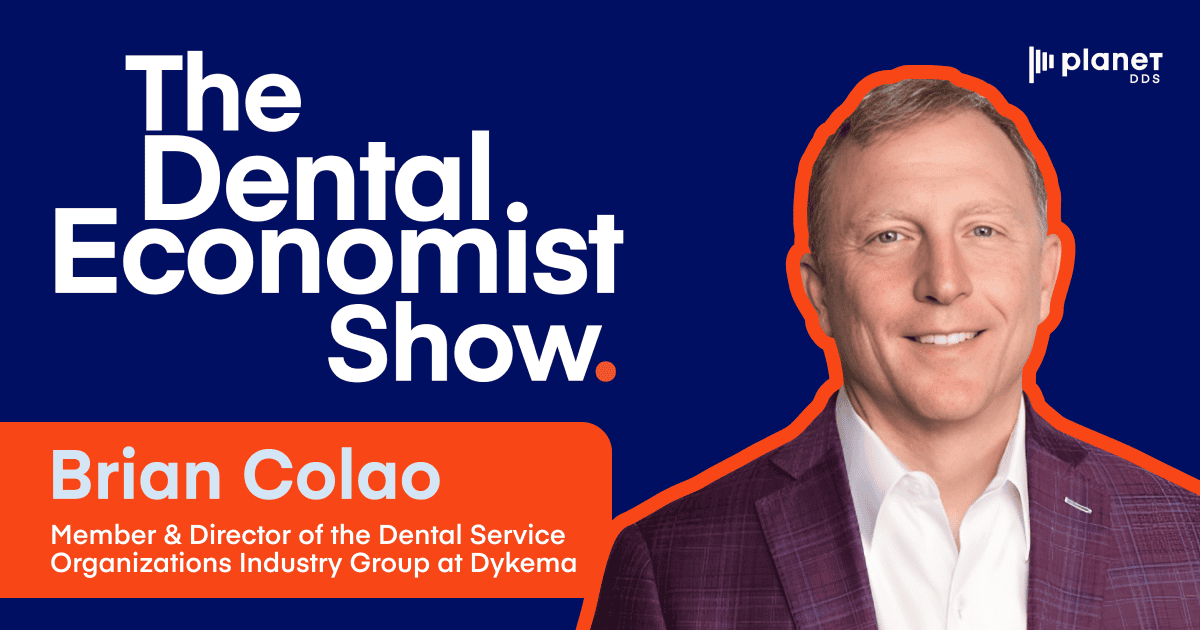
For many dental professionals, 2025 was the year of survival. And, thriving in 2026 is going to take a complete shift on every front: leadership, technology adoption and strategy. In the latest episode of The Dental Economist Show, host CRO Mike Huffaker of Planet DDS starts the new year by sitting down with Brian Colao, Director of the DSO Industry Group at Dykema, for a candid retrospective on 2025’s “muted recovery” and what’s really coming next.
What you’ll learn:
- How tariff unpredictability (not rate cuts) derailed M&A momentum
- Why same-store growth requires the “Education, Integration, Implementation, Adaptation” obstacle course
- The “anatomy of a failing DSO” checklist
- How to filter AI noise from genuine innovation
- Why fear (not economics) is holding back turnarounds
- What 2026 actually looks like for DSOs
Tune in for actionable strategies to position your organization for the growth that 2026 promises to bring.
Episode Highlights
The Dental Economist Show is kicking the year off in style as Mike Huffaker sits down with Brian Colao for his candid recap of 2025 and what lies in store for us in 2026. Here are some highlights from the show:
How tariff chaos killed M&A momentum in 2025
Colao emphasizes that the unprecedented nature of 2025’s tariff announcements (fluctuating between 50%, 100%, then canceled, then restarted) forced CFOs to abandon traditional forecasting and budget with massive margin-of-error buffers, instead. In a normal environment, CFOs forecast quarterly expenses with 1 to 3% variance; in 2025, they had to allow 15 to 25% swings just to account for tariff uncertainty.
For DSO leadership teams making capital investment and M&A decisions, this unpredictability created a paralyzing effect because you cannot justify acquiring another practice or upgrading technology when your cost structure is a moving target.
One practical step to help solve this: Until policy stabilizes, focus M&A only on deals where synergies are so strong that tariff swings won’t break the economic model, meaning high integration potential, immediate overhead reductions or specialty revenue that offsets supply costs. This is why 2025 saw far fewer deals than 2021 through 2024, and why deal quality matters more than deal velocity going forward.
The education-integration-implementation-adaptation framework for growth
Colao reveals that most DSO groups attempting to drive same-store growth fail because they skip critical steps in the implementation journey. Only about 30 to 40% of organizations successfully navigate the full cycle of educating staff, integrating tools with their practice management system, rolling out implementations across multiple locations and achieving lasting adaptation.
For DSO leaders focused on operational excellence and sustainable growth, this framework is essential because skipping even one step, like proper staff education or PMS integration, causes initiatives to stall mid-execution.
The key is treating this like an obstacle course where you must pass each gate sequentially: falter at education and your dentists won’t use the tool, falter at integration and your staff faces friction, falter at implementation planning and adoption across dozens of offices becomes impossible.
Overhead and revenue cycle management: Why DSOs fail
Colao draws from years of consulting experience to reveal that 75% of struggling DSO organizations share two primary problems: bloated overhead and broken revenue cycle management (RCM). Most leaders focus on blaming same-store growth tools or market conditions, but the real issues are internal; too many managers, too many administrators, and too much money sitting in accounts receivable.
For DSO executives tasked with turning around underperforming groups, this insight cuts through the noise and gives you a diagnostic starting point: Before investing in new technology or chasing every growth opportunity, audit your overhead and RCM processes ruthlessly.
The key action is to stop chasing ten different improvements at once. Instead, laser-focus on cutting overhead by 10 to 15% and improving collections velocity by five to ten days.
Fear is the enemy: Separating the winners from survivors
Colao reveals that the organizations pulling ahead in 2025 were willing to accept short-term EBITDA dips to invest in systems, training, and technology, even when the market was uncertain and everyone else was freezing. This “one step back, two steps forward” mentality is counterintuitive; most groups stayed paralyzed, afraid that spending money during downturns would worsen their position.
For DSO leaders navigating margin pressure and uncertainty, this distinction is critical: Fear-driven organizations avoid all investment and drift sideways while confident organizations invest selectively and come out stronger.
About The Dental Economist Show
Don’t miss insightful conversations with industry experts on the latest trends and top strategies to grow your DSO or dental group. Tune in to The Dental Economist Show each week as we meet at the intersection of profit and purpose.
Listen to the full podcast: