2025 Holiday Special: The Year That Changed Dentistry
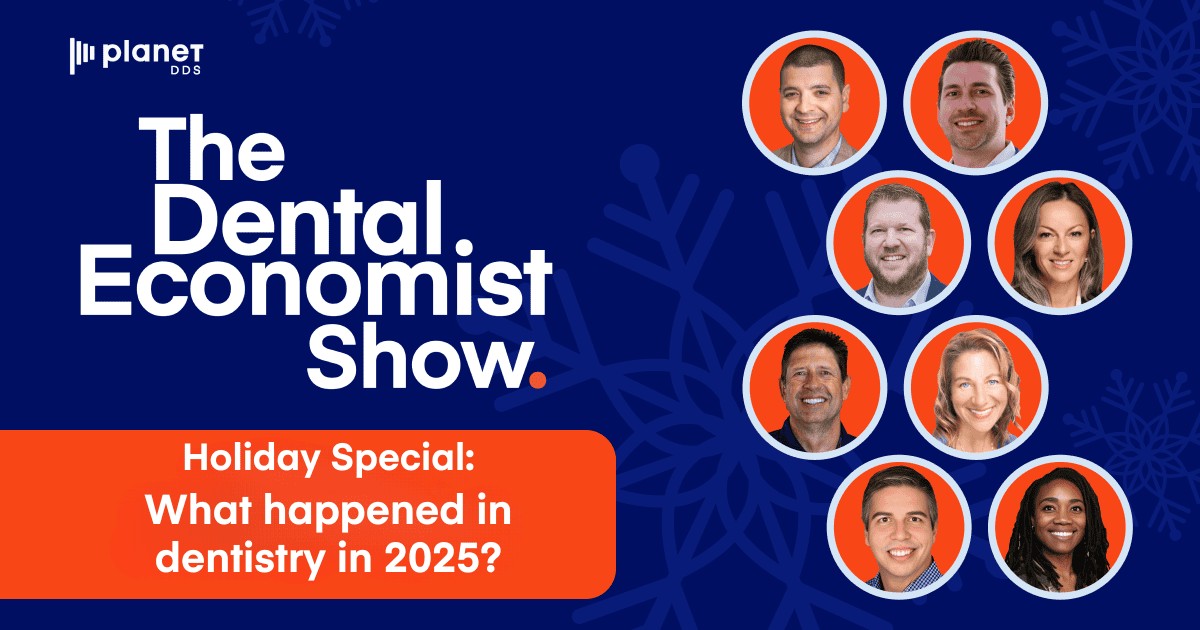
As the year in dentistry comes to a close, there’s A LOT to unpack. Join us for a retrospective on the latest episode of The Dental Economist Show as host, Mike Huffaker reflects on some of the most thought-provoking insights, opinions and predictions we’ve witnessed on the series this year, courtesy industry experts Tom Barberio, Ryan Mingus, Greg White and Jill Nesbitt.
What you’ll learn:
- How to shift your mindset on dental IT from cost center to revenue enabler by investing in specialists
- Why automation in revenue cycle management (RCM) is the immediate game-changer
- The framework for building your practice to be “sale-ready” regardless of whether you ever sell
- How to define and operationalize great culture beyond buzzwords
- How aesthetics drive revenue while improving long-term oral health
- The critical difference between vendor partnerships and internal advocacy
Tune in for the perfect snapshot of the year gone by (in dentistry) to head into 2026.
Episode Highlights
If you’re looking for the perfect snapshot to head into 2026, the latest episode of The Dental Economist Show is the one for you. Tune in as host Mike Huffaker reflects on some of the most thought-provoking insights from Tom Barberio, Ryan Mingus, Greg White, and Jill Nesbitt, and more. Here are some highlights from the show:
Technology isn’t a cost center; it’s a growth enabler
Tom Barberio explains how the dental industry has shifted its perspective on technology from a necessary expense to a competitive advantage that drives patient acquisition and operational efficiency. This mindset change is critical for practice leaders because it directly impacts how you allocate resources and prioritize innovation investments in your business.
The key step is to build IT infrastructure and expertise around clinical tools – practice management systems, digital radiography, and automation – rather than just fixing hardware problems. By adopting this enabler mindset, you’re positioning your practice to compete effectively in an increasingly tech-driven dental landscape.
Aesthetics as a gateway to comprehensive oral health
Greg White notes that people consistently invest in appearance and dental aesthetics can serve as the entry point for comprehensive health improvements with 40 to 50% projected spending growth over the next decade. This is strategically important because aesthetics-driven demand creates both revenue opportunity and a genuine pathway to improve overall patient health outcomes simultaneously.
The practical step is to reframe your cosmetic services not as “luxury” but as integrated health solutions that improve oral function, periodontal health, and patient confidence. Essentially, embracing aesthetics as a legitimate business and clinical lever, allows you to tap into genuine patient demand while improving their long-term health outcomes.
AI implementation to reclaim time, improve cash flow and reduce burnout
Jill Nesbitt identifies various areas in which AI is transforming dated dental management practices – revenue cycle automation, insurance coverage, scheduling and more. This matters to your bottom line because team burnout from manual collection work directly correlates with higher turnover and lower productivity. The immediate step is to implement “set and forget” automated communication systems that send statements, payment reminders, and follow-ups without manual intervention.
By leveraging automation in the revenue cycle, you’re not just improving cash flow, you’re protecting your team’s morale and creating bandwidth for higher-value clinical work.
Build your business to sell regardless of exit plans
Ryan Mingus shares a foundational principle: Structure your practice operations as if you’re preparing to sell it, whether or not you ever intend to. This framework matters because the systems and habits you build today directly impact both your current profitability and your future valuation, creating a win-win scenario for present and future gains. Many practice owners optimize for short-term cash extraction, which ironically undermines long-term value creation and makes their businesses harder to scale or sell.
The actionable step is to focus on three high-leverage areas: implementing AI-driven clinical tools for better case acceptance, adding higher-margin service lines like implants or orthodontics, and automating processes that don’t require your direct involvement.
Build culture on accountability, not blame
Greg White defines great culture as a shared commitment to accountability, zero blame, zero complaining and zero procrastination, where every team member holds themselves to high standards. This cultural framework is essential because it directly impacts staff retention, clinical quality and your ability to implement new systems without resistance or burnout.
The key step is to establish clear goals, communicate expectations transparently and create safe spaces for conflict resolution that don’t leave “residue” or resentment. When your team operates from internal accountability rather than external punishment, they become self-motivated problem-solvers who drive business growth without constant supervision.
Position specialists as your internal advocates
Mike explains how working directly for your practice, rather than a software vendor, creates undivided allegiance and the bandwidth to bridge gaps between leadership goals and vendor capabilities that vendors alone can’t fill. This matters because software implementation success depends on advocacy from someone inside your organization who understands your challenges and can push back constructively with vendors.
The key step is to hire or contract with implementation specialists who are directly accountable to you, giving them skin in your success while maintaining collaborative relationships with software partners. By securing direct advocacy for your implementation journey, you dramatically increase adoption rates, reduce staff friction and maximize ROI on your technology investments.
Listen to the full episode:
